Ask Me What Matters is a national pilot that embeds care-experienced children and young people’s own well-being priorities into everyday practice, ensuring their voices directly shape the support they receive. It involves incorporating questions about the things that are important to young people in conversations with social workers or personal advisers and capturing these insights and the actions that follow in local authority systems.
Introduction
For over a decade the Bright Spots programme has provided a unique insight into how children in care and care leavers feel about their lives in the areas that are important to them. Developed by Coram Voice in partnership with Professor Julie Selwyn at the University of Oxford, the Bright Spots surveys were co-produced with children in care and care leavers to measure what they felt made their lives good.
The Ask We What Matters (AMWM) pilot builds on the Bright Spots programme. Whilst the Bright Spots programme provides an effective point in time overview of how groups of children in care and care leavers are doing and allows services to respond to what they told them collectively, it does not allow local authorities to identify and act on how individual children and young people feel they are doing.
AMWM seeks to remove this gap. It ensures children and young people’s voices are gathered regularly, recognised and used to shape the support they receive in real time.
AMWM is guided by three core principles:
1. No voice without action – Change will be based on what children and young people say matters most to them.
2. Co-production – AMWM works with local authorities to co-produce improvements with children and young people.
3. Change to practice at every level – From individual support to strategic decisionmaking.
AMWM aims to ensure that services for children in care and care leavers are shaped by what matters most to them, by:
• Embedding subjective well‑being questions into everyday conversations
• Updating data recording systems so workers can capture and respond to young
people’s views
• Supporting practitioners and leaders to act on what young people say
• Co‑producing improvements with young people at every stage
Four local authorities (Coventry, Dorset, St Helens, Surrey) have been working with Coram Voice over the last two years. There are three phases to the work:
1. Mapping and scoping
Identifying which aspects of well-being matter most to young people building on insights from the Bright Spots programme about what is most strongly associated with well-being:
• Reviewing existing recording tools and agreeing with young people how they want their workers to talk to them about the things that matter to them
• Scoping how to integrate new questions into everyday practice and recording tools (e.g. in care plans, pathway plans) to ensure they are used consistently
2. Embedding well-being priorities
Co-producing action plans with young people:
• Updating IT and case management systems
• Creating youth-led guidance for staff on how to talk to children and young people about the things that matter to them and how to record these conversations
3. Informing practice
Training workers to ask about, record, and act on young people’s views:
• Developing AMWM guides, films, and peer learning resources
• Beginning to capture data in updated systems and using early insights to refine practice
This briefing focuses on Phase 1. It outlines the well-being areas that were chosen by local authority in partnership with their children and young people. Some areas replicate the Bright Spots questions; others have been jointly constructed by children and young people and local authorities.
Talking with young people about what matters most to them
Identifying what children and young people want adults to talk to them about was an important part of the Ask Me What Matters pilot. However, it became evident early in the project that how workers talked with young people was just as important.
Children and young people highlighted the importance of ‘curious conversations’ – using thoughtful questions to get to know them and make them feel seen and heard. Children were clear that AMWM should not become a ‘tick box exercise’, but a meaningful way for workers to understand them and what matters to them as individuals.
All LAs have worked on guidance for workers, created in partnership with children and young people – see these examples from St Helens:
Ask Me What Matters – YouTube
St Helens Listens – see AMWM children’s visual tool resource
Who talks to children and young people
Who asks the questions can significantly influence how children and young people respond, and this should be carefully considered when designing approaches. For example, the anonymous Bright Spots surveys explore levels of trust in workers and carers among children in care and care leavers. To minimise bias, these surveys are not administered by social workers, personal advisers or carers.
AMWM authorities were therefore asked to work with young people to identify what questions should be asked, who should ask them and in what context. This is important because young people need to feel comfortable and supported to be open and honest when sharing their views.
Across the four local authorities AMWM questions are mainly asked by social workers or personal advisers, but one local authority also plans to include Independent Reviewing officers. At the time or writing, St Helens and Surrey have gone ‘live’ with using the questions and collecting data. Coventry and Dorset are working towards launch.
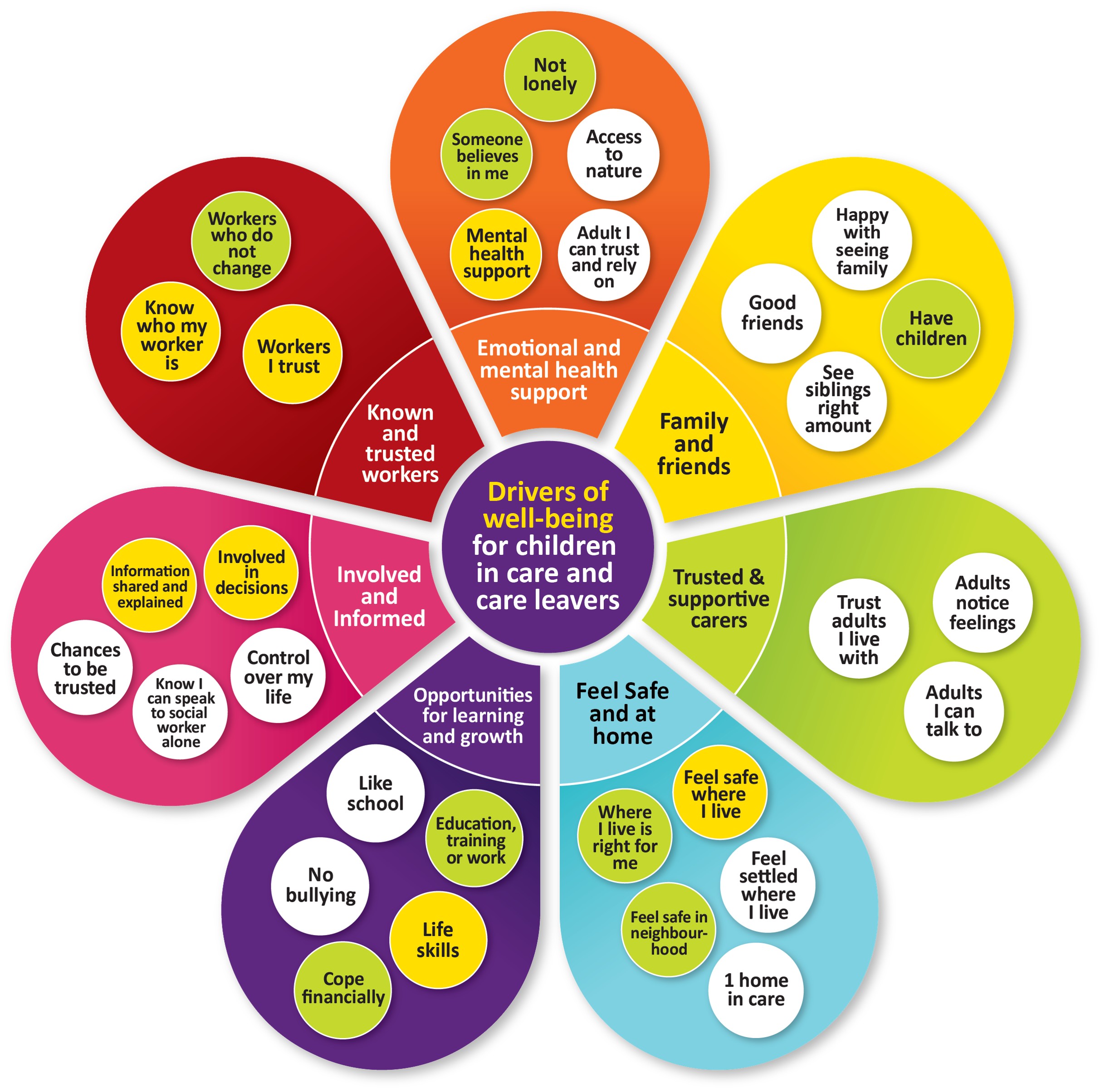
Seven drivers of well-being
All the questions we explore in the Bright Spots surveys cover aspects of life that children in care and care leavers told us make their lives good. We also ask a set of core well-being questions that explore happiness, life satisfaction, whether the things you do in life feel worthwhile, positivity for the future and anxiety.
By using statistical and qualitative analysis of Bright Spots surveys responses we identified the areas that are most strongly linked to well-being. In our From Surviving to Thriving report we outline seven drivers of well-being for children in care and care leavers, based on over 27,000 survey responses. These are:
1. Emotional and mental health support
2. Family and friends
3. Trusted and supportive carers
4. Known and trusted workers
5. Feel safe and at home
6. Involved and informed
7. Opportunities to learn and grow