
At a glance
Barnsley worked with care leavers to understand why the Setting Up Home Allowance was not stretching far enough in practice. Young people identified barriers in how the allowance could be accessed and spent. By working directly with corporate parents, housing partners and local organisations, Barnsley introduced practical solutions including cash access, affordable furnishings and support with flooring costs.
Where this work came from
All care leavers in England are entitled to a grant from their local authority to help them set up home after leaving care known as the Setting Up Home Allowance or leaving care grant.
In April 2023, A National Voice (ANV), the national children in care council for England, managed by Coram Voice, launched a campaign focused on the Setting Up Home Allowance. The ‘Grand campaign’ followed concerns raised by care-experienced young people that support varied across the country. Some young people received different amounts, while others were unclear about what the allowance could be used for or how to access it.
ANV carried out a Freedom of Information request and consulted with care-experienced young people nationally. From this, a report with local and national recommendations were developed to improve fairness and understanding.
ANV then invited local authorities to take part in more detailed local work. The aim was not to impose one national solution, but to help areas consult with their own young people and improve their local offer based on lived experience.
During 2024–25, ANV provided guidance and conversation tools. Local authorities then worked with their care leavers to identify and address their own priorities. Barnsley chose to take part in order to understand how the allowance worked in reality and whether it supported young people to successfully set up their first home.
Why Barnsley got involved
Early conversations showed that the issue was not simply the amount of money available. Young people described practical barriers that prevented them from using the allowance effectively.
They explained they could not directly spend their allowance because purchases had to be made through a personal adviser using a procurement card. This caused delays and meant they often missed cheaper deals or second-hand items. Experiences also differed depending on the worker supporting them, as there was no clear shared process.
Young people also highlighted the impact of council rules preventing cash purchases. This meant they could not buy lower-cost items from places such as Facebook Marketplace, making their allowance go less far.
Listening to young people and decision makers together
Barnsley involved young people directly in influencing change. Care leavers took part in a Corporate Parenting Panel takeover, where they presented real-life scenarios showing how they balanced the Setting Up Home Allowance with everyday living costs.
They explained the practical challenges they faced and suggested improvements, including issues around flooring and the condition of properties.
The feedback was then turned into an action plan for the Corporate Parenting Operational Group.
Understanding the real problem
Through these discussions, a specific issue became clear. When properties were allocated, existing carpets were often removed if they were worn or not hygienic. Although the properties were technically ready to move into, they were not always practically liveable.
Young people described moving into homes with bare floors and needing to resolve this immediately. Because housing allocations could not easily be delayed, they had little choice but to prioritise flooring before anything else. As a result, a large portion of their Setting Up Home Allowance was spent straight away making the property usable rather than buying essential household items.
This meant young people were starting independent living without basic furniture or equipment, and some were only able to use part of their home at first. The issue was therefore not only financial. It affected comfort, wellbeing and whether the property felt like a home.
Developing solutions
Rather than waiting for a long policy process, Barnsley focused on solutions that could improve young people’s experiences immediately. The aim was to help the allowance stretch further in practice while longer-term changes were explored.
They began working closely with housing providers and local organisations to remove avoidable costs. Young people had explained that carpets were sometimes removed even when they could have been cleaned and reused, so the council purchased a carpet cleaner that care leavers could borrow before moving in. This meant some properties could be made liveable without using a large portion of the allowance.
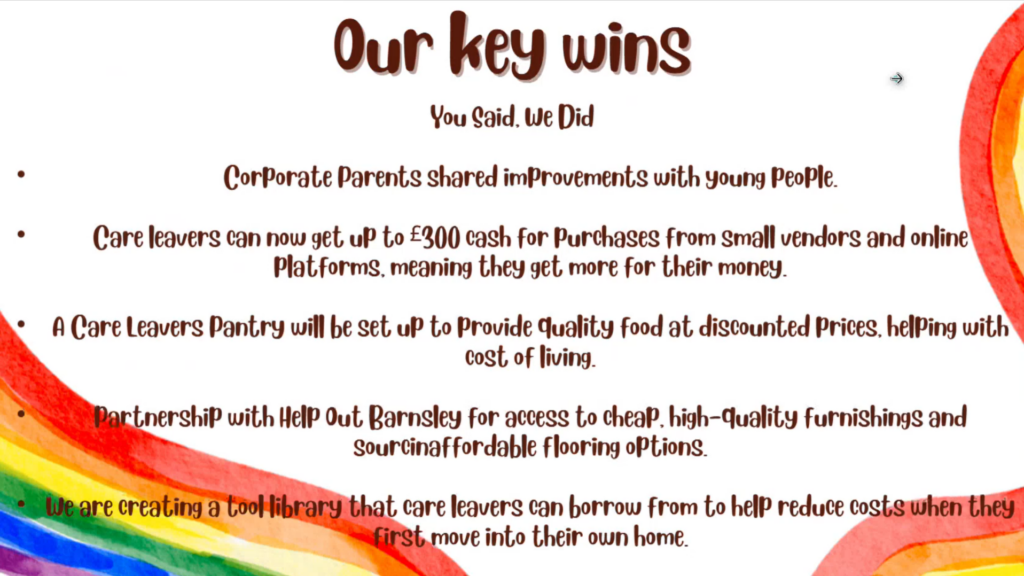
Barnsley also worked with Berneslai Homes to improve the condition of properties offered to care leavers and to provide suitable flooring where possible. Alongside this, they partnered with Help Out Barnsley so young people could access affordable furniture and low-cost flooring options, helping them prioritise essential household items rather than spending most of their funding on one issue.
Wider improvements
The work led to further changes beyond housing support. As discussions continued, Barnsley recognised that restrictions on how the allowance could be spent were limiting its effectiveness. Previously, purchases had to be made through staff using procurement processes, which meant young people could not take advantage of cheaper second-hand items.
Working with finance and corporate parenting teams, the council developed a controlled approach that allowed greater flexibility while still meeting audit requirements. Care leavers can now access up to £300 in cash to buy items from small sellers or online marketplaces, helping them make their money go further and choose items that suited their needs.
Alongside this, Barnsley explored additional ways to support independent living. Plans were developed for a care leavers pantry offering discounted food, and a tool library so young people can borrow equipment when setting up their homes rather than needing to purchase everything themselves.
Learning and reflections
Barnsley found that many challenges were caused by systems rather than funding levels. Restrictions on how money could be spent created unintended barriers for young people.
By bringing young people and corporate parents together, decision makers could see the real impact of processes and understand why changes were needed. The project showed that practical adjustments to procedures can significantly improve how effective the allowance is.
What happens next
Barnsley view this work as an ongoing programme of improvement rather than a completed project. They are now exploring the development of a formal Setting Up Home Allowance policy to provide greater consistency, while continuing to gather evidence about how the changes are working in practice.
The service is also working with local retailers, housing providers and corporate partners to reduce costs further and expand support available to care leavers. Alongside this, they are monitoring the flexible funding approach and building assurance for finance teams so access to funding can potentially be increased while still meeting audit requirements.
Advice to other local authorities
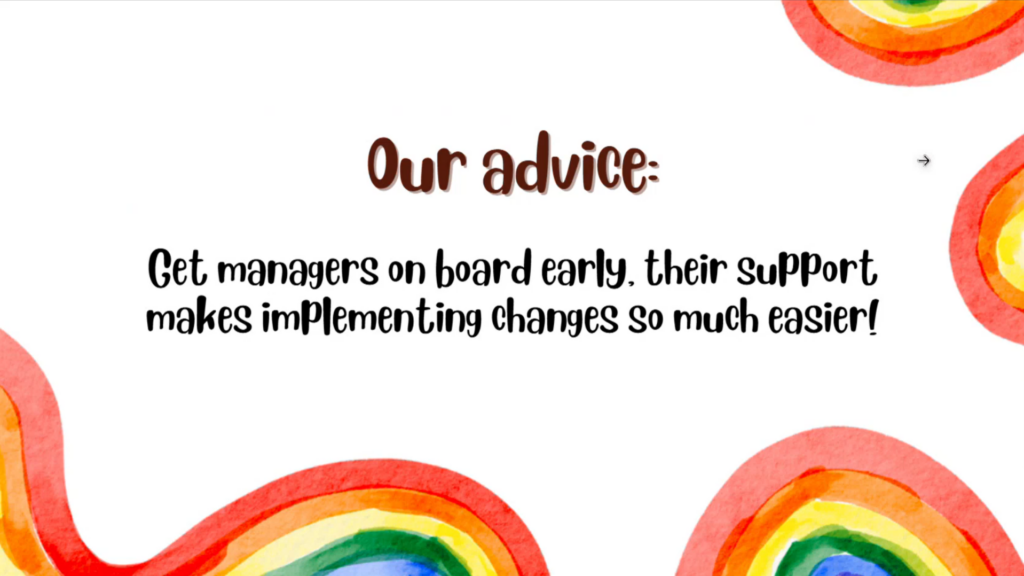
Barnsley emphasised the importance of gaining management and corporate parenting support early. They found that many of the proposed changes, particularly increasing flexible access to funding, required reassurance for finance teams and auditors. Senior backing made it much easier to implement new approaches.
Involving decision makers directly in participation activities was particularly effective. Through the Corporate Parenting Panel session, councillors and senior staff heard real-life examples from young people about the challenges they faced when setting up a home. This helped them understand the practical impact of processes that had previously seemed reasonable on paper.
Barnsley also highlight the importance of focusing on practical barriers, not just policy. By working collaboratively across housing, finance and corporate parenting teams, they were able to make changes that improved how the allowance worked in everyday life for young people.