

Care leavers are six times more likely to face homelessness than other young people. Drawing on Coram Voice’s advocacy casework, tens of thousands of Bright Spots survey responses and the voices of care-experienced young people, this report explores how care leavers experience housing insecurity and homelessness, and sets out what needs to change nationally and locally so that every young person leaving care has a safe and stable home. It is published by the Coram Institute for Children, the dedicated research and development organisation for children at the heart of the Coram Group.
Download a PDF or scroll down for the full report.
Acknowledgements
We would like to thank the young people and professionals, in particular the Youth Advocates and Specialist Advocates from Coram Voice, who contributed their views to inform the findings and recommendations in this report.
Authors
Louise Mumcular, Voices in Action, Coram & Linda Briheim-Crookall, Coram Voice
About this report
This report draws on evidence from Coram Voice’s Advocacy Service casework and existing data from tens of thousands of Bright Spots survey responses from young people. It is grounded in the experiences and perspectives of care leavers and places their voices at the centre of the findings, rather than relying on adult interpretations of their lives.
We are extremely grateful to the young people who gave us their time through participating in focus groups, workshops and individual interviews. This included Voices in Action Housing Rights Ambassadors, A National Voice Ambassadors and Care Experienced Consultants. It is the voices of these young people, along with the voices of young people who have responded to Bright Spots surveys, that you will see quoted throughout. We have also included anonymised case studies about young people who have received support from a Coram Voice Advocate.
The report is published by the Coram Institute for Children, the dedicated research and development organisation for children at the heart of the Coram Group.
About us
Coram and the Coram Institute
Coram’s vision for children is a society where every child has the best possible chance in life, regardless of their background or circumstances. Building on our legacy as the first and longest continuing children’s charity, the Coram Institute for Children is instrumental in realising this vision by acting as a catalyst for change and collaboration, seeking evidence-based solutions to the challenges facing children in the 21st century in policy, law and practice.
The Coram Institute for Children is the only Independent Research Organisation dedicated to the future of children, working with partners and young people to learn from the past, examine current needs, improve practice and create better chances for the next generation. More information about Coram and the work of the Institute can be found here: www. coram.org.uk
Coram Voice
Founded 50 years ago as Voice for the Child in Care and now part of the Coram group, Coram Voice champions the rights of children by getting young voices heard in decisions that matter to them and working to improve the lives of children in care, care leavers and others who depend upon the help of the state.
Bright Spots Programme
The Bright Spots Programme has been working with children in care and care leavers for over a decade to understand what they feel is important to have a good life. The Bright Spots Programme was developed by Coram Voice together with Professor Julie Selwyn at the Rees Centre, Department of Education, University of Oxford and funding from the Hadley Trust.
Voices in Action
Coram’s Voices in Action youth homelessness programme empowers young people with lived experienced of homelessness or housing insecurity to influence change. The Housing Rights Ambassadors do this through campaigning locally and nationally to change policy and practice, designing and delivering training to frontline professionals, and empowering their peers with knowledge of their rights through workshop delivery and content creation.
Abandoned, ignored, silenced
You stare. No, you assess.
Like property. Like risk. Like something to be controlled.
Measure me. Label me.
Decide what I’m worth before
I ever speak.
Abandoned.
Ignored.
Silenced.
Scan the room for value, like predators of power,
searching for weakness,
for something easy to control,
For something you can own.
My hope gives you away. A mistake.
My wishes make me visible. A liability.
And you use that. Exploit both.
You don’t ask who I am.
You already decided.
That’s the mistake.
That’s the opening.
Glimpse by glimpse,
you exploit my vulnerability.
A room full of people
and not one asks who I am—
yet everyone knows my name.
On files.
On forms.
Whispered in corridors.
Like a title in a hall of fame
etched on paperwork,
passed around like gossip—
but my story is inconvenient.
none attached.
I am not a person to you.
I am a number.
A case. A risk. A problem.
A responsibility you resent.
An object you shove
from place to place
until it cracks.
Passed hand to hand
until I crack.
You smile and promise care.
Person-centred, you chant.
We listen.
We help.
Lies said softly
sound professional.
One unsafe place
after another.
You call it housing.
You call it care.
You call it safe.
You see a roof over my head yet decide its home
A borrowed bed cannot be called home.
A friend’s couch cannot be labelled home.
That roof over my head is not home.
Listen to me, don’t be deceived.
“This place is safe,” you say.
Say it again.
Say it louder.
If you repeat it enough,
Maybe you’ll believe it.
Safe for you.
Unsafe for me.
Silenced anyway.
Abandoned. Ignored. Silenced.
Summary
For most young people, leaving home is a gradual process supported by family, financial help and a safety net to fall back on. For many care leavers, it is very different. Despite significant developments in law, policy and guidance over the last 25 years, too many young people continue to leave care without the stable foundation that a safe and suitable home provides. Data shows that care leavers are six times more likely to face homelessness compared to other young people.1
“The biggest change [needed] isn’t just building more homes, it’s ensuring that no care leaver is ever forced to live alone before they are ready! When I turned 18 years old, I felt abandoned.”
The Government has recently made clear its ambition to ensure that no young person becomes homeless when leaving care.2 The recommendations in our report call for further change, in both national policy and local practice, to support delivery of the Government’s ambition. They focus on strengthening planning, improving access to suitable accommodation, increasing financial and practical support, promoting enduring relationships, and ensuring local systems work together around the needs of young people. We shine a light on examples of good practice, demonstrating that the Government’s ambition is achievable.
The evidence presented in this report is grounded in Coram Voice Advocacy Service casework, reflecting the lived experiences of care leavers supported by our advocates to have their voices heard and rights upheld. It is further informed by focus groups and interviews with care-experienced young people, data from tens of thousands of responses from young people to our Bright Spots surveys, and wider existing research.
The evidence is clear. Care leavers are significantly more likely to experience homelessness than their peers, yet this is neither inevitable nor acceptable. Where young people live after care has a profound impact on their well-being, mental and physical health, education, employment, relationships and financial security. A safe and stable home is not simply somewhere to sleep. For care leavers, it represents security, belonging, consistency and the opportunity to build a positive adult life.
“Looking at my home makes me so proud, my home is how I want it and has such a homely cosy feel. There is something about looking at the past to where I am now and having my own home has really helped me move past my childhood and look forward to the future!”
Our advocacy casework shows that housing is the issue care leavers most commonly seek support with. Young people describe planning for leaving care coming too late, inadequate information about their rights and housing options, and feeling excluded from decisions about their future. Some leave care without a clear accommodation plan. Others are placed in accommodation that does not meet their needs, leaves them feeling unsafe, or separates them from important support networks and relationships.
Our report highlights the importance of a joined-up approach.
Housing outcomes depend on effective partnership working between housing services, leaving care teams, adult social care, health services, education providers and the voluntary sector.
Recent reforms offer an opportunity to improve accountability and ensure local practice matches national expectations.
We identify three priorities for improving outcomes for care leavers:
- First, care leavers must be fully informed about their rights and options and be meaningfully involved in planning for their future. Pathway planning should begin early, be personalised, and include realistic information about housing options and challenges. Young people should have access to trusted adults, specialist advice and independent advocacy to help them understand, exercise and uphold their rights.
- Second, care leavers need access to safe, suitable and affordable homes. Housing decisions must be driven by young people’s individual needs and aspirations, not simply by the availability of accommodation. This includes ensuring access to social housing, maintaining support networks, considering neighbourhood safety, addressing barriers faced by disabled care leavers, and recognising the importance of relationships, including those with pets, to young people’s well-being.
- Third, care leavers need ongoing support to secure and sustain a home. Stable housing is closely linked to trusted relationships, practical help and financial security. Many care leavers continue to face cliff-edge reductions in support, financial hardship and inconsistent access to assistance. Young people need gradual transitions to adulthood, strong relationships with trusted professionals, and financial support that reflects the realities of independent living.
Achieving the Government’s ambition that no young person becomes homeless when leaving care will require sustained commitment, accountability and collaboration across national and local systems. It will also require consistent measurement of outcomes to ensure progress is tracked and organisations are held to account.
Most importantly, it will require us to listen to what care leavers have told us for years they need – when care ends, home matters. No young person should leave care without one.
Our recommendations
1: “Make sure I know my rights and plan with me”
Recommendations – national policy
The Department for Education should
- Amend Chapter 3 (Pathway Planning) of Volume 3 of the Children Act 1989 Guidance and Regulations to set out more explicitly the expectations on leaving care teams to ensure care leavers understand their personal housing options. This should include:
- Requiring Pathway Plans to set out the housing options available to the young person, reflecting the accommodation information contained within the Local Offer for Care Leavers.
- Reinforcing the requirement in the Care Leavers (England) Regulations 2010 for Pathway Plans to include clear actions, timescales and named individuals responsible for delivery.
- Strengthening expectations that young people are informed, involved and at the centre of all stages of pathway planning.
- Providing more detailed guidance on developing high-quality Pathway Plans, including examples of effective practice and templates co-produced with care-experienced young people.
Recommendations – local practice
Local authorities should
- Embed specialist housing advisers in all leaving care teams to support care leavers and to upskill Personal Advisers (PAs), ensuring they can give advice to care leavers grounded in knowledge of housing options.
- Co-produce information about accommodation options and housing support with care leavers to ensure information is delivered in ways that are meaningful and understandable to young people.
- Review pathway planning practice together with care leavers to ensure all young people have high quality plans that are developed and regularly reviewed with young people.
- Proactively offer care leavers access to independent advocacy when preparing to leave care and when experiencing homelessness or housing issues. This should be delivered in line with National Standards for the Provision of Children’s and Young People’s Advocacy Services3 and include access to non-instructed advocacy and advocacy in a language they understand.
2: “I need a home that’s right for me”
Recommendations – national policy
The Ministry of Housing, Communities and Local Government should
- Amend the Allocation of Accommodation Guidance4 to require local authorities to prioritise care leavers within their social housing allocation schemes, minimise gatekeeping barriers, and publish clear, accessible information on eligibility criteria and nomination processes. The guidance should also require, rather than strongly encourage, local authorities to give the same level of priority to care leavers placed in their area by another authority who wish to remain there, as they would to their own care leavers.
- Introduce a care leaver exemption from local connection requirements in homelessness legislation, mirroring the exemption already available in social housing allocations. This would enable care leavers to access homelessness assistance in the area where they have established support networks and choose to live.
- Extend priority need status within homelessness legislation to all care leavers, regardless of age.
The Department for Education should
- Require Regional Care Cooperatives to include care leavers in regional sufficiency strategies, including forecasts of need, commissioning intentions and plans for care leavers’ accommodation, to complement local authorities’ existing duties. These should include family-based options available for young people in adulthood including Supported Lodgings and Shared Lives, in addition to Staying Put for young people who have been in foster care.
- Ensure the barriers to increasing the numbers of Staying Put arrangements, including financial disincentives, are understood and addressed as part of the revision of the Staying Put guidance.
- Extend Staying Put arrangements to age 25 to provide greater stability and parity with the experiences of other young adults.
- Ensure services are needs led rather than age led, enabling care leavers to have gradual and extended transitions. In relation to housing, this could mean removing blanket rules that mean only those under 18 can live in a particular setting or access a certain service.
Recommendations – local practice
Local authorities should
- Design housing pathways that recognise transitions to adulthood are rarely linear. Care-experienced young people should have the option to step back into higher levels of support, including returning to previous homes or supported living arrangements where suitable. Decisions such as declining a Staying Put arrangement should not prevent young people from accessing support later if independent living proves challenging.
- Consider care leavers’ needs holistically when assessing accommodation suitability. In particular, local authorities should consider how safe a young person feels (both in their homes and in their neighbourhoods) and how housing policies can enable care leavers to maintain positive relationships, including with their pets if this is identified as a support need.
3: “Help me to secure and keep a home”
Recommendations – national policy
The Department for Work and Pensions should
- Give care leavers entitlement to the over-25 rate of Universal Credit from the age of 18.
- Extend the exemption from the Shared Accommodation Rate for care leavers from age 25 to 35, to align with the age threshold at which the Shared Accommodation Rate applies.
The Department for Education should
- End the postcode lottery of financial support by creating a national offer for care leavers that is mirrored in care leaver local offers to provide all care leavers with council tax exemptions, rent deposit and rent guarantor schemes.
- Develop and implement a national strategy to equip the leaving care workforce with the time, resources, skills, knowledge and confidence to provide all young people leaving care with the support they need. This should be rooted in relational practice and an expectation that local authorities operate a model that allocates care leavers a PA at age 16 who stays alongside them until age 25.
The Department for Education and Ministry of Housing, Communities and Local Government should
- Work with Kings College London to develop an extended, large-scale pilot of the Randomised Controlled Trial Cash Transfer Pilot for Care Leavers.
Recommendations – local practice
Local authorities should
- Structure leaving care services so that PAs have the capacity to spend time with young people to develop trusting and supportive relationships with them.
- Put in place arrangements to ensure care leavers experience no gap in income when they turn 18, including providing financial support during the five-week wait for a first Universal Credit payment.
- Have clear, published information on care leaver entitlement to the Setting Up Home Allowance and guidelines for how it can be spent. Young people should also have freedom to choose how it is spent.
4: Making it happen: a joined-up system around care leavers
Recommendations – national policy
The Department for Education and Ministry of Housing, Communities and Local Government should
- Monitor and publish data on the local implementation of new care leaver housing and homelessness duties, including the application of local connection in social housing and on intentional homelessness decisions for care leavers.
- Share effective practice where implementation of new duties is making a difference to care leavers.
The Department for Education should
- Ensure leaving care support is not removed from care-experienced young people based on immigration status, including former unaccompanied asylum-seeking children and young people whose immigration status remains unresolved when they reach adulthood.5
Ofsted should
- Maintain a focus within the revised ILACS inspection framework on the quality of PA support, effective pathway planning, and ensuring care leavers have safe and stable homes. This should include how local authorities assess care leavers’ accommodation and support needs and commission services to meet current and future demand.
Recommendations – local practice
Local authorities should
- Work with care leavers as partners in the design, review and improvement of housing and leaving care services, including the development of joint housing protocols. Participation and co-production activities should be accessible and inclusive, with proactive steps taken to ensure disabled care leavers are able to contribute their views and influence decisions about services that affect them.
- Include accommodation outcomes, as defined by young people (for example, whether young people feel safe where they live) within local corporate parenting strategies and frameworks.
- Strengthen transition planning and multi-agency working so that disabled care leavers can move into suitable accommodation with the support needed to sustain it. Local authorities should start planning early and coordinate children’s services, adult social care, housing, health and mental health services to assess needs, secure appropriate accommodation and establish clear responsibilities. Timely Care Act assessments, joint transition plans and effective information-sharing arrangements should be in place before a young person leaves care, with accessible information, communication support and advocacy available throughout the process.
- Identify young people who are not eligible for adult social care but have disability-related support needs that may affect their housing outcomes and ensure they are supported through pathway planning and Staying Close. Accommodation decisions should be based on a young person’s needs and required support, not solely on Care Act eligibility.
- Commission specialist housing, independent living and tenancy sustainment support to address gaps in provision and reduce the risk of unsuitable accommodation or homelessness.
Introduction
Every year, thousands of young people in care become ‘care leavers’ on their 18th birthday. For some, it can be even sooner. Widely referred to as their transition to adulthood, young people face significant changes in the care and support to which they are entitled. Where they will live can be the most significant change.
For the professionals in young people’s lives, these changes are no surprise; they should be anticipated and planned for, and in the last 25 years the Government has increased local authority responsibilities towards young people leaving care through the introduction of new legislation and guidance.6 Care leavers should receive ongoing support from leaving care services at least until age 21 and up to 25 if they request this. This includes support from a Personal Adviser (PA) to help plan and assist with the transition to adulthood, including finding suitable accommodation.
Furthermore, since 2017, corporate parenting was placed on a statutory footing for the first time in England, introducing seven corporate parenting principles that local authorities must have regard to, requiring them to support care leavers up to the age of 25 as if they were their own children. This includes duties to ensure young people are safe, have stability in their home life and are prepared for adulthood and independent living.7
The Children’s Well-being and Schools Act 20268 extended corporate parenting responsibilities beyond local authorities to a wider range of public services, requiring them to collaborate when carrying out corporate parenting functions. The Act also strengthens responsibilities towards care leavers by requiring local authorities to provide increased support as young people transition to adulthood.
The current picture
Government statistics indicate that care leavers face an increased and growing risk of homelessness compared to other young people. In 2024-25, at least 1 in 10 young care leavers faced homelessness9 compared to 1 in 60 young people.10
Care leavers are six times more likely to face homelessness compared to other young people.
It is particularly worrying that Government statistics show 600 of these young people faced homelessness straight after leaving a care placement, for example foster care or a children’s home.11 Statutory guidance is clear – there should be no expectation that care leavers’ housing needs will be met through recourse to local authority homelessness duties.12 These statistics suggest inadequate planning, or lack of planning altogether, as young people are leaving care placements without a new home to move into.
In recent years, a growing number of young people enter care at an older age13 Young people who enter care as teenagers are much more likely to experience placement instability and be housed in ‘out of area’ placements.14
At Coram Voice, we support hundreds of care leavers every year to have their voice heard and their rights upheld through our advocacy helpline, local advocacy and homeless outreach services.
Our advocacy casework indicates that housing is the top issue care leavers seek help with.
For care-experienced young people this is about more than providing a roof over their head. Ensuring care leavers have a home that’s right for them provides the foundation for a positive start to adulthood, supporting them to thrive in all areas of their life, including education, employment, relationships, and mental and physical health.
“Looking at my home makes me so proud, my home is how I want it and has such a homely cosy feel. There is something about looking at the past to where I am now and having my own home has really helped me move past my childhood and look forward to the future!”
The importance of home to care leaver well-being
Our recent research on the well-being of care experienced children and young people is clear that having a home that is right for you and feeling safe where you live are important determinants of care leavers’ well-being.
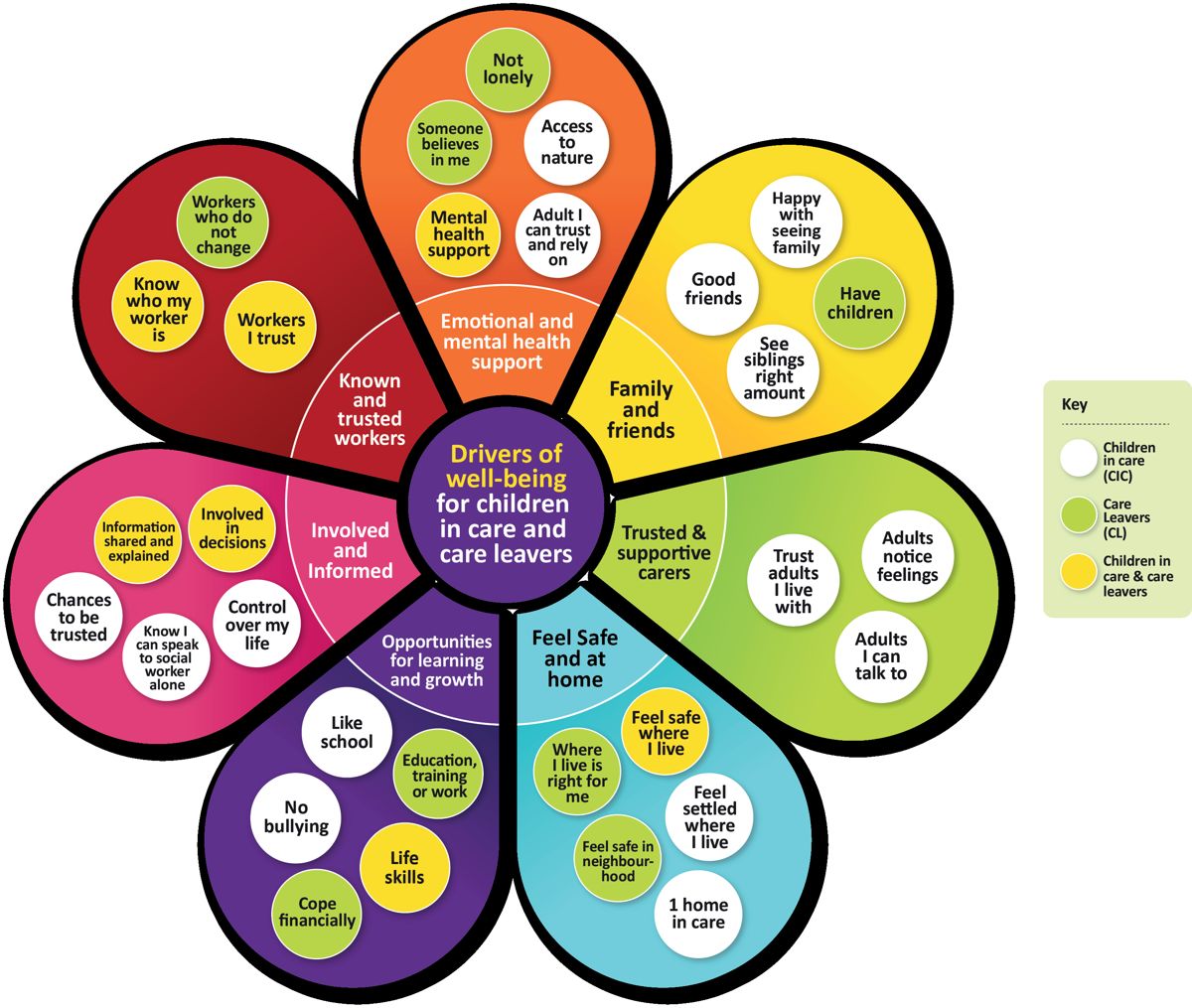
From Surviving to Thriving: The seven drivers of well-being for children in care and care leavers15 draws on 10 years of data gathered from tens of thousands of ‘Bright Spots’ surveys of children and young people about what matters to them.16
The report identifies seven interrelated drivers of well-being (see Figure 1). For care leavers, where a young person lives can enable or undermine many of the other drivers of well-being, including mental and physical health, financial security, relationships and support networks, and opportunities for education and employment.
Figure 1: The drivers of well-being for children in care and care leavers
Coram Voice’s Bright Spots surveys identify things that that children in care and care leavers say make their lives good. We found that key drivers of well-being can be grouped into seven interrelated areas. Feeling safe and at home is a key driver of well-being and also linked to other areas of well-being.
“I’m now being evicted over a year on and in loads of debt. I just want somewhere I feel safe and I can call mine to make the best for my mental and physical well-being as well as my future.”
A safe and stable home plays a key role for young people as they grow up, including during their move into adulthood.
A third of care leavers do not always feel safe in their home.
Our research shows the importance of feeling safe and at home to care leavers. We found the odds of low well-being are 1.5 times higher for care leavers who did not feel safe where they live. This could include feeling unsafe at home, or feeling unsafe in their neighbourhood due to, for example, antisocial behaviour, noisy neighbours, criminality, or drug use. Some care leavers also wanted support to move away from people they were scared of, including abusive ex-partners. The lowest well-being was reported by care leavers who were homeless or living in temporary or emergency accommodation. Additionally, care leavers who self-reported disability or long-term health problems were significantly less likely to feel safe at home compared with care leavers who were not disabled.
Government statistics suggest that around 9 in 10 care leavers are in suitable accommodation, yet only 7 in 10 care leavers report where they live is right for them.
Conversely, we also know that many care leavers do feel that where they live is right for them.17 Care leavers who lived with former carers, parents or in supported lodgings reported higher well-being and those who were ‘Staying Put’ (living with former foster carers) scored highest on all well-being measures.
We asked a group of care leavers ‘What does home mean to you?’18
These responses are in line with the responses from over 300 children and young people who fed into the Independent Review of Children’s Social care in 2021.19
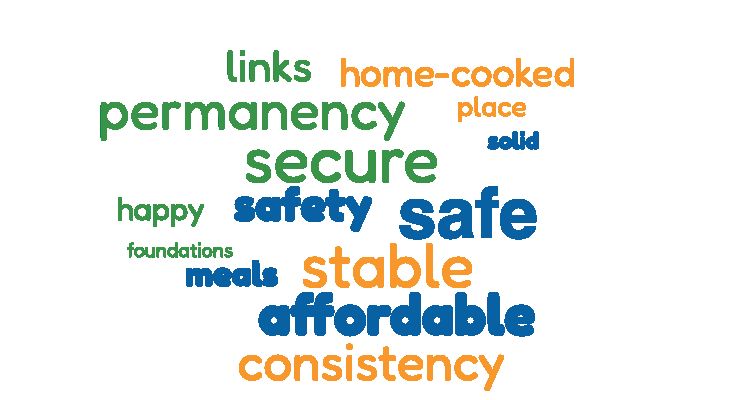
2026 responses
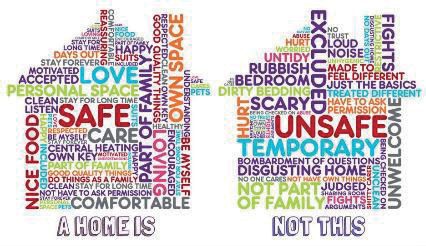
2021 responses - from ‘Home is not a placement’: What makes a home and what does not. What children and young people wanted to say to the Care Review - A National Voice. 20
Housing insecurity and homelessness should not be, and is not, inevitable for young people leaving care. In theory, the support care leavers are legally entitled to should mean they never face the risk of homelessness.
The Government’s ambition for care leavers
Over the past year, the Government has significantly strengthened its commitment to improving housing outcomes for care leavers. A growing body of legislation, policy and statutory guidance has set out a clear expectation that care leavers should be supported to access safe, stable and suitable housing and protected from homelessness. This includes the National Plan to End Homelessness,21 which identifies care leavers as a priority group, updated guidance on the care leaver local offer22 and good practice guidance on joint housing protocols.23 The Children’s Well-being and Schools Act 2026 further strengthens support for care leavers through measures including an exemption from intentional homelessness rules and the national rollout of Staying Close support. Together, these developments signal a clear ambition that no young person should leave care without the foundations that a safe and secure home provides.
In November 2026 the Government published its Care Leaver Homelessness Reduction Plan.24 The plan sets out a programme of action across Government and partners to reduce homelessness among care leavers and improve access to stable housing and support. The introduction of ambitious targets to end homelessness among young people leaving care placements and halve homelessness among care leavers under 25 is a significant step forward. The critical challenge now is implementation.
This report is intended as a practical contribution to achieving the Government’s ambition. Drawing on the experiences of care leavers, evidence from advocacy casework and existing research, it explores why too many young people still experience housing instability despite an increasingly strong policy framework. It identifies the barriers that continue to prevent care leavers from accessing safe, stable homes and recommends further national and local action, along with practice examples, to ensure that every care leaver has the foundations they need to thrive.
Our report is grounded in the experiences and perspectives of care leavers, placing their voices at the centre of the findings rather than relying on adult interpretations of their lives.
1: “Make sure I know my rights and plan with me”
Care leavers should be fully informed about their rights and options relating to housing and at the centre of planning for their future
Involved
For care leavers, having a say in decisions about their care and understanding future plans is essential for positive well-being and ensuring they have a home that’s right for them. Pathway Plans are an important part of this, setting out plans for their transition from care to adulthood, identifying their needs, setting goals, and coordinating the support required to achieve them. Our From Surviving to Thriving report found care leavers who felt involved in pathway planning had greater odds of high well-being, whereas not being involved was linked to low well-being.
Although many young people leaving care do feel involved in planning, our advocacy casework shows that despite national guidance,25 planning for young people can come too late and too many have poor quality pathway plans.
Advocates describe a lack of long-term planning, focusing only on the immediate needs of the young person; a lack of timescales for delivery of actions in the plan; a lack of contingency planning in relation to housing, leaving a young person at risk of homelessness if the stated plan does not work out; and a lack of involving young people in the development of their plan. Shockingly, our advocates support some young people who have never seen their Pathway Plan or simply do not have one. These findings reflect data in our From Surviving to Thriving report, that identifies a mixed picture of care leaver involvement.
3 in 5 (60%) of care leavers felt involved in their pathway planning all or most of the time and 10% of care leavers either did not have a plan or did not know what one was.
Further analysis of the same Bright Spots data showed that care leavers who are homeless or in temporary accommodation less often report feeling involved in pathway planning.
“Pathway Plans are usually done without us. I had to fight to find out what is in it.”
Informed
One of the biggest issues our advocates help care leavers with is knowing what their local authority accommodation options are and their rights to support.
“The number one challenge for young people is lack of information.”
“I want young people to know about their options before they turn 18.”
“I was given inaccurate advice – I was told I had to be age 23-25 to get a council house.”
“It should be taught in schools and colleges where to go for help in a crisis so you know before it happens.”
Our advocates report a common misconception among many young people that when they turn 18, they will immediately have entitlement to social housing. While care leavers may be given priority, access to social housing remains constrained by limited supply and local eligibility criteria.
This misconception has been exacerbated by the growing use of AI. Although it has provided opportunities for young people to digest complex information and seek to understand their rights, it has also created new challenges in instances where AI tools give inaccurate or misleading information.
Our advocates and legal services report having to support young people to sort fact from fiction, sometimes creating friction with services when care leavers are disappointed that they cannot access the support they believed was available.
Despite the requirement for care leaver local offers to include clear and accessible information about accommodation and housing support available, advocates report that care leavers are often insufficiently aware of the realities of the housing system. This includes understanding the short and long-term accommodation options available, the likely timescales for securing permanent properties, social housing waiting lists and financial responsibilities they will need to take on once they are 18.
Access to realistic, accurate and timely information about accommodation options is vital for care leavers to secure a safe and suitable home. It helps them understand their choices, prepare for moving, address concerns and make informed decisions.
Young people have said that in relation to housing in particular, information needs to be shared and explained earlier and in more detail. Our Voices in Action Housing Rights Ambassadors are clear that whilst written information is important, it can be “full of jargon”, “non-specific to their needs”26 and “feel cold”. Even more important to them is that young people have a trusted adult they can turn to for accurate and specialist knowledge when required. Speaking to “someone who has already been through it” is also highly valued. They recognise the complexities of the housing system, and feel their carers or PAs may not always have the information they need.
“We need collaborative support and someone we can rely on.”
Our Ambassadors also identify barriers to young people seeking out information or asking for help:
“Asking for help makes you vulnerable.”
“You’re used to things being sh*t and dealing with things on your own.”
“You have low expectations and might not believe there is a solution or a way to get help.”
Advocacy
At Coram Voice we know the value of advocacy to ensure care leavers are informed and understand their rights (see Coram Voice Case Study 2 on p16). We provide commissioned advocacy services for children and young people in 23 local authorities, and our specialist advocacy projects support young people who are homeless, in crisis or have a disability. Advocates empower young people to have their views, wishes and feelings heard in decisions being made about their lives.
The Government’s recently updated National Standards for the Provision of Children’s and Young People’s Advocacy Services27 recognise that there are key points in leaving care when support from an advocate will be particularly important: when preparations are being made for a young person to leave care, when a young person is navigating the children’s social care and housing systems and when a young person is transitioning from children’s to adult services.
Young people leaving care up to age 25 have a legal right to advocacy support.28 However a number of independent and government-commissioned reports consistently find that the provision of advocacy services by local authorities are inconsistent and that looked-after children, children in need and care leavers do not always feel listened to or receive the support they are entitled to.29
Our Always Heard30 report found some care-experienced young people continue to face barriers to accessing advocacy including: local services restricting access by age (often resulting in older care leavers not meeting eligibility criteria), a lack of non-instructed advocacy for young people with disabilities, lack of provision in alternative languages for young people who are migrants or refugees and services unable to support young people living outside of the local authority area.
Recommendations – national policy
The Department for Education should
- Amend Chapter 3 (Pathway Planning) of Volume 3 of the Children Act 1989 Guidance and Regulations to strengthen expectations for pathway planning and housing preparation for care leavers. This should include:
- Requiring Pathway Plans to set out the housing options available to the young person, reflecting the accommodation information contained within the Local Offer for Care Leavers.
- Reinforcing the requirement in the Care Leavers (England) Regulations 2010 for Pathway Plans to include clear actions, timescales and named individuals responsible for delivery.
- Strengthening expectations that young people are informed, involved and at the centre of all stages of pathway planning.
- Providing more detailed guidance on developing high-quality Pathway Plans, including examples of effective practice and templates co-produced with care-experienced young people.
Recommendations – local practice
Local authorities should
- Embed specialist housing advisers in all leaving care teams to support care leavers and to upskill PAs, ensuring they can give advice to care leavers grounded in knowledge of housing options.
- Co-produce information about accommodation options and housing support with care leavers to ensure information is delivered in ways that are meaningful and understandable to young people.
- Review pathway planning practice together with care leavers to ensure all young people have high quality plans that are developed and regularly reviewed with young people.
- Proactively offer care leavers access to independent advocacy when preparing to leave care and when experiencing homelessness or housing issues. This should be delivered in line with National Standards for the Provision of Children’s and Young People’s Advocacy Services and include access to non-instructed advocacy and advocacy in a language they understand.
2: “I need a home that’s right for me”
Care leavers need safe, suitable and affordable housing
Having a safe and suitable home has a direct impact on outcomes for care leavers, not only in relation to well-being but also physical health and wider life chances.
Only a third of care leavers who are homeless or in temporary accommodation always feel safe where they live compared to two thirds of other care leavers.32
Evidence from our advocacy casework shows many care leavers struggle to find and secure suitable and affordable housing; especially from the private rented sector, youth-specific housing and one-bedroom homes, and move on options that build independence and maintain stability. Whilst all young people face barriers to accessing safe and suitable housing,33 care leavers are particularly disadvantaged because they are frequently required to transition to independent living without the financial, practical, and emotional support that many other young people receive from their families and at an earlier age than many of their peers.
Safety
From Surviving to Thriving found that care leavers not feeling safe where they live and in their neighbourhood increases the odds of low well-being.
A third of care leavers do not always feel safe in their home.
Young people have described exposure to crime, violence, drug-related activity, antisocial behaviour and intimidation in the communities where they were housed.
1 in 10 care leavers never felt safe in their neighbourhood.
There is also recent evidence that rising levels of racism, misinformation, far-right mobilisation, and public hostility towards migrants has led to separated and displaced young people who are care leavers experiencing additional discrimination, fear, and social isolation.34
“I live in a troublesome area... Last week a shopkeeper was attacked by knifepoint... I am frightened to go out by myself.”
Care leavers can also feel unsafe due to experiences of domestic abuse and difficulties accessing alternative accommodation.
“I want to relocate to be away from my daughter’s father who was abusive. Although relocating is proving to be difficult.”
In From Surviving to Thriving we found that 69% of care leavers report that where they live is right for them. In written comments, some care leavers expressed their satisfaction with where they were living. They appreciated having their own space, or a sense of security; they liked the area or living near people they cared about.
“It’s a really nice council flat which is out of the way and has a nice view.”
This shows that it is possible to get it right for care leavers, but that too many (31%) still do not have a home that is right for them. We can learn from where things are working to support those who are not yet in safe and settled accommodation.
Disrepair
Our advocates support many care leavers to deal with disrepair issues after they have been told by their leaving care service to contact their landlord directly. Anecdotal feedback from local authority leaving care teams points to a shared frustration about delays to repairs, highlighting the need for stronger accountability of housing providers. Problems such as damp and mould can negatively affect young people’s physical and mental health, and lead to additional financial costs.
“When I turned 18, I had no say in where I moved to, and I was forced out into a horrible rat-infested s**t show. The repairs were never fixed. It took over a year to move.”
“My flat has a mould and damp problem which has been ongoing for two years and it is very frustrating and not good for my health or well-being.”
Pets
Pets can play a significant role in care leavers’ emotional well-being, providing companionship, routine, comfort and a sense of responsibility (see Coram Voice case study 3). Pets can therefore be a very significant relationship for a young person.
Data from our From Surviving to Thriving report shows that when we asked care leavers about who provides them with emotional support, a higher percentage of care leavers report that their pets provide emotional support (18%) than their foster carers (17%).
Almost 1 in 5 care leavers feel their pets provide emotional support.
Coram Voice advocates have supported some care leavers who have said they would rather sleep in a tent with their beloved pet than accept accommodation where pets are not permitted. For some care leavers, particularly those who lack trusted and supported human relationships, pets can provide an important source of companionship and support.
“Council properties suck and it’s not the most disability accessible. It’s hard to find one suitable for me at my age range with pets near my support network”
Accommodation options
Our advocacy casework and direct work with young people also highlights the problematic nature of linear housing pathways within policy and practice models for care leavers. For example, pathways may assume young people will move on from care to semi-independent accommodation, then to an independent tenancy and into a stable adulthood. A recent evidence review finds the reality for care leavers is periods of stability and instability, moves between different kinds of housing, returns to family or friends, and periods of homelessness. It also highlights the importance of avoiding the assumption that independence is the desired end point for all care leavers, as their need for support is likely to fluctuate through their life.35
Staying Put
Whilst their care status changes, young people should not have to automatically leave where they are living just because they turn 18. Staying Put is a scheme that enables young people to remain with their foster carers, if both parties agree, from the age of 18 to 21. Our From Surviving to Thriving report found that almost nine in ten (89%) of care leavers who remained with their former foster carers through Staying Put were in education, training or employment, compared with just over half of those living in supported accommodation. Evidence from the Centre for Homelessness Impact found that Staying Put significantly lowers the risk of homelessness for care leavers, yet participation rates of foster carers have remained low.36
“Accommodation should be matched to individual needs, for example proximity to workplace or education.”
Supported accommodation and shared lives
Some young people will not be ready to live independently when they leave care, and it is important to have a range of accommodation options to meet their needs. Our Specialist Advocacy Service for young people with disabilities supports disabled care leavers who face additional barriers to accessing suitable accommodation (see Coram Voice case study 4).
Local authorities must include more specialist accommodation providers in their range of housing options and consider models such as Shared Lives37 to provide care and support for care leavers who could benefit from living in a family environment.
“There are blanket rules. They don’t look at individual circumstances. For example if want to move out of accommodation because it’s not right.”
“The biggest change [needed] isn’t just building more homes, it’s ensuring that no care leaver is ever forced to live alone before they are ready! When I turned 18 years old, I felt abandoned.”
Social homes
We recognise the acute shortage of social rented homes is a systemic challenge, with many local authorities operating waiting lists of several years. We welcome the removal of the social housing local connection test to enable care leavers to access social housing no matter where they choose to live. However, we are concerned that local authorities are ‘strongly encouraged’, and not required, to give the same level of priority to care leavers who are not the responsibility of the local authority where they live.
Given almost half of children in care live out of area, a significant proportion of care leavers who were placed out of area as children in care, may still face this additional barrier to achieving a permanent home in the area they have settled in.
We also know from our advocacy work and direct work with young people that it is vital to help young people settle in communities where they have established connections. Indeed, the Government’s Enduring Relationships policy paper38 recognises this, stating ‘enduring, trusted relationships provide stability and belonging into adulthood’. As it stands, current social housing policy risks undermining this welcome ambition to prioritise care leaver relationships.
Homelessness support
While the removal of local connection requirements from social housing allocation rules is a welcome step, a similar barrier remains within homelessness legislation. Care leavers can still be referred to another local authority under Part 7 of the Housing Act 1996 on local connection grounds. This also risks separating young people from trusted relationships, education, employment and support networks at exactly the point they need stability. This will be particularly problematic for the many care leavers who were placed away from their home area whilst in care, through decisions outside their control. This risks both undermining the Government’s ambition to strengthen enduring relationships and prevent care leaver homelessness.
Current homelessness legislation recognises that care leavers may face heightened vulnerability by granting automatic priority need status up to the age of 21. However, the experiences described throughout this report demonstrate that the challenges associated with leaving care do not abruptly end at 21. Many care leavers continue to experience housing insecurity, low incomes, poor mental health and limited family support well into adulthood. Restricting enhanced homelessness protections to younger care leavers risks creating a further cliff-edge in support at age 21, and fails to reflect the realities of care leavers lives.
Recommendations – national policy
The Ministry of Housing, Communities and Local Government should
- Amend the Allocation of Accommodation Guidance39 to require local authorities to prioritise care leavers within their social housing allocation schemes, minimise gatekeeping barriers, and publish clear, accessible information on eligibility criteria and nomination processes. The guidance should also require, rather than strongly encourage, local authorities to give the same level of priority to care leavers placed in their area by another authority who wish to remain there, as they would to their own care leavers.
- Introduce a care leaver exemption from local connection requirements in homelessness legislation, mirroring the exemption already available in social housing allocations. This would enable care leavers to access homelessness assistance in the area where they have established support networks and choose to live.
- Extend priority need status within homelessness legislation to all care leavers, regardless of age.
The Department for Education should
- Require Regional Care Cooperatives to include care leavers in regional sufficiency strategies, including forecasts of need, commissioning intentions and plans for care leavers’ accommodation, to complement local authorities’ existing duties. These should include family-based options available for young people in adulthood including Supported Lodgings and Shared Lives, in addition to Staying Put for young people who have been in foster care.
- Ensure the barriers to increasing the numbers of Staying Put arrangements, including financial disincentives, are understood and addressed as part of the revision of the
Staying Put guidance.
- Extend Staying Put arrangements to age 25 to provide greater stability and parity with the experiences of other young adults.
- Ensure services are needs led rather than age led, enabling care leavers to have gradual and extended transitions. In relation to housing, this could mean removing blanket rules that mean only those under 18 can live in a particular setting or access a certain service.
Recommendations – local practice
Local authorities should
- Design housing pathways that recognise transitions to adulthood are rarely linear. Care-experienced young people should have the option to step back into higher levels of support, including returning to previous homes or supported living arrangements where suitable. Decisions such as declining a Staying Put arrangement should not prevent young people from accessing support later if independent living proves challenging.
- Consider care leavers’ needs holistically when assessing accommodation suitability. In particular, local authorities should consider how safe a young person feels (both in their homes and in their neighbourhoods) and how housing policies can enable care leavers to maintain positive relationships, including with their pets if this is identified as a support need.
3: “Help me to secure and keep a home”
Care leavers need ongoing support underpinned by enduring relationships
Too often care leavers experience what Professor Mike Stein coined ‘accelerated and compressed transitions to adulthood’, to describe the way many care-experienced young people are required to move into adulthood far more quickly than their peers.40 While most young people can rely on ongoing emotional, practical and financial support from family well into their twenties, care leavers are often expected to become independent at a much younger age and within a much shorter timeframe.
“Care leavers are often pushed to become adult too quickly.”
Trusted relationships
Stable housing and positive life chances depend on care leavers having sustained and flexible support that is rooted in trusted relationships, not just having accommodation or a ‘roof over their head’. Housing outcomes are strongly linked to continued caring relationships and support.41
One person can change everything. My after-care worker (actual role was supported lodgings co-ordinator) supported me for 2 years. She took me on temporarily and actually became permanent. I knew I could speak to her anytime, she checked in on me, she helped me move. She also completed the necessary referrals I needed such as an advocate, mental health support and so much more. This should be standard for all young people.”
Wider support networks help give young people stability and support to thrive. Our From Surviving to Thriving report found almost 9 in 10 of young people who remained with their foster carers after 18 were in education, training or employment, compared with just over half in supported accommodation. Family and friends can also provide both direct and indirect support, so it is important that the care system helps children maintain and develop relationships rather than break them.
“I am really happy where I live, I’m so proud of myself with how I have got my house. It’s on a new housing estate in an area where I want to be. I rent the house off my brother who I am very close to.”
Personal Advisers
Our research also found that PAs were the second most common source of emotional support for care leavers, second only to friends.
45% of care leavers reported that their PAs gave them emotional support.
Through the Bright Spots survey data, we can see that there is a link between trusting your worker and stability of workers, and how you feel about where you live. Among care leavers who always trust their worker, 85% reported always feeling safe at home. Among those who do not always trust their worker, this decreases to 68%.42
“When I got my new aftercare worker, for once in my life I finally felt heard… having a stable person… she was my reason to live.”
Coram Voice advocates support many care leavers who miss out on the opportunity to build connection and trust with their PA. This can be due to staff high staff turnover resulting in multiple changes in PA, delayed allocation of PA to the young person, or unsustainable caseloads that mean PAs don’t have time to provide young people with the relationship-based support they need.
Too many care leavers continue to experience abrupt withdrawal of support at multiple stages, in addition to the well-documented cliff-edge when leaving care at age 18.43 For example, it is common for a local authority policy to significantly reduce PA support from age 21.
“Don’t keep changing professionals with us, we need one person who’s going to stick with us and be that stability and encouragement.”
The recent independent review into care leaver deaths found the main source of support provided to young people who have left care comes from their PA. However, the review found ‘the support provided by PAs can vary greatly from place to place… there really is huge variation in quality of practice.’44 It highlighted how the PA role has traditionally been to deal with practicalities rather than support young people emotionally to deal with complex and traumatic life experiences. However, From Surviving to Thriving showed that care leavers feel that where the PA role is working well, they can also be an important source of emotional support. These experiences should be built on and extended, so that all young people can benefit.
“My PA visited me every six months for the first two years of my tenancy. She had a quality assurance framework that she followed to check on things like cleanliness, repairs.”
“More information and support is needed with practical advice like setting up accounts and paying bills.”
Financial security
Care leavers need adequate financial support to achieve housing stability. We know too many care leavers have no financial safety net and face financial insecurity; one of the factors placing them at an increased risk of homelessness.
Over 1 in 5 care leavers struggle to cope financially
Whilst the local authority is responsible for looked after children and providing accommodation and maintenance to 16- and 17-year-old relevant children,45 currently too many young people face an abrupt ending to this support on their 18th birthday and are generally expected to support themselves financially, either through employment or claiming benefits. With no additional support from family to fall back on care leavers can find it particularly challenging to cope on benefits. Due to the five-week waiting period after claiming Universal Credit, our advocates support young people facing debt or rent arrears before they even move into their first independent home.
We know that many local authorities include housing-related financial support within their Local Offer for Care Leavers, such as council tax exemptions, rent deposit schemes and rent guarantor arrangements. Some local authorities also provide additional financial support during the five-week wait before receiving their first Universal Credit payment. However, access to and the scope of this support varies considerably between areas, leaving care leavers’ entitlements dependent on local policy.
Care leavers also face a postcode lottery in relation to the administration of the Setting Up Home Allowance by local authorities, a payment made to support care leavers moving into their first independent home to purchase essential equipment and household items. We welcomed the updated Government guidance published last year,46 which clarified that all care leavers should receive a minimum £3,000 Setting Up Home Allowance (SUHA). This reflected a recommendation from A National Voice (the national council for children in care and care leavers in England) in The Grand Campaign for clear guidelines on entitlements, following our finding that more than a year after the increase was announced, 1 in 10 local authorities had still not changed local practice.47 However our advocates continue to support young people who face difficulties in how the SUHA is administered locally. This has included payments being made late, resulting in young people being unable to pay for essentials at the point of moving into their new home. We also know young people experience variations and restrictions in what it can be spent on, often leading to a prolonged dispute between young people and leaving care services over essential purchases, creating additional stress at a critical point in their transition to independent living.
There is evidence to indicate that giving care leavers direct financial support results in both improved housing stability and improved levels of well-being. Our report on the impact of the Covid-19 pandemic on care leavers’ well-being found the proportion of care leavers struggling financially during the pandemic decreased.48 Many local authorities put in place additional support for care leavers during this period and national initiatives including the uplift to Universal Credit and free laptops and internet access for care leavers eased financial pressure. More recently, research from the Policy Institute at Kings College London found care leavers who were given a one-off £2,000 cash lump sum, with no strings attached, were more likely to be in stable housing and less likely to be sofa-surfing than their peers. They were also happier and had stronger relationships.49
Recommendations – national policy
The Department for Work and Pensions should
- Give care leavers entitlement to the over-25 rate of Universal Credit from the age of 18.
- Extend the exemption from the Shared Accommodation Rate for care leavers from age 25 to 35, to align with the age threshold at which the Shared Accommodation Rate applies.
The Department for Education should
- End the postcode lottery of financial support by creating a national offer for care leavers that is mirrored in care leaver local offers to provide all care leavers with council tax exemptions, rent deposit and rent guarantor schemes.
- Develop and implement a national strategy to equip the leaving care workforce with the time, resources, skills, knowledge and confidence to provide all young people leaving care with the support they need. This should be rooted in relational practice and an expectation that local authorities operate a model that allocates care leavers a PA at age 16 who stays alongside them until age 25.
The Department for Education and Ministry of Housing, Communities and Local Government should
- Work with Kings College London to develop an extended, large-scale pilot of the Randomised Controlled Trial Cash Transfer Pilot for Care Leavers.
Recommendations – local practice
Local authorities should
- Structure leaving care services so that PAs have the capacity to spend time with young people to develop trusting and supportive relationships with care leavers.
- Put in place arrangements to ensure care leavers experience no gap in income when they turn 18, including providing financial support during the five-week wait for a first Universal Credit payment.
- Have clear, published information on care leaver entitlement to the Setting Up Home Allowance and guidelines for how it can be spent. Young people should also have freedom to choose how it is spent.
4: Making it happen: a joined-up system around care leavers
Translating national expectations into local reality
“There is a lack of joint working between housing and leaving care team. [I experienced] an abdication of responsibility by leaving care – saying it is a housing policy.”
There is a substantial national framework of legislation, policy and guidance that sets out clear expectations on local authorities to work across housing, children’s services and wider partners to plan accommodation early, prevent homelessness and provide coordinated support to care leavers.
Indeed, since the Children and Social Work Act 2017, local authorities have had a clear legal duty to have regard to seven corporate parenting principles,50 and these principles apply not only to children’s services, but across local authority functions, including housing services.
The Children’s Well-being and Schools Act 2026 strengthened this requirement, including through a stronger expectation that councils translate those principles into concrete support in relation to housing and prevention of homelessness for care leavers. The Government has recently updated statutory guidance and good practice guidance51 to reinforce the expectation that housing departments are corporate parents and are expected to work jointly with children’s services. There is also a clear expectation in the guidance52 on joint housing protocols for care leavers that young people’s lived experience should shape the development, review and improvement of protocols, including learning from those who have faced challenges accessing or sustaining accommodation.
The recently published Care Leaver Homelessness Reduction Action Plan53 ‘strongly encourages’ local authorities to include care leaver homelessness reduction targets in their local homelessness action plans. The Plan sets out monitoring arrangements for both the Ministry of Housing, Communities and Local Government and the Department for Education to monitor progress against these targets and in addition Ofsted inspectors will consider local authority arrangements for supporting care leavers as part of their wider pre-inspection activity and inspection frameworks.
It will be important these mechanisms are used effectively to hold all local authority partners to account, ensuring the new duties and principles are consistently and effectively translated into effective local practice.
A shared responsibility
It is clear that whether care leavers understand their rights, access suitable accommodation, or receive support to sustain a tenancy depends on housing, leaving care, health providers, education, employment services and the voluntary sector working together. Achieving better housing outcomes therefore requires shared responsibility and a whole-system response.
“Wider support is interlinked with housing. PAs and jobcentre staff should work together to alert if young people are at risk of being NEET (Not in Education, Employment or Training) and put in support to avoid sanctions that can lead to arrears and then homelessness.”
Coram Voice advocates support many care leavers who report being passed between their leaving care service and housing service, making it difficult for them to know where to turn for support. For example, one advocate described how a young person was supported by their leaving care service with the administration process to get a bidding number for a social home, but not with the bidding process itself, having been told this was the responsibility of the housing service.
Care leavers with disabilities
Local authorities’ responsibilities towards disabled care leavers are the same as for all other care leavers. Because of their additional needs, some young people may draw on several services, receive support from several professionals and have multiple plans (see Coram Voice case study 4). Local authorities are expected to ensure these processes are streamlined as much as possible, and roles and responsibilities discussed with the young person and their carers.54
However, due to responsibilities being shared across multiple services and agencies, care leavers with disabilities face a greater risk of poor outcomes when agencies or services operate in silos. Coram Voice’s research report Disability, Disparity and Demand55 found that disabled care leavers can experience poor transitions from care to adulthood due to failures in communication and coordination between agencies. It highlights evidence that transition planning is often undermined by a failure of services to work together, a failure to communicate between agencies, a separation and disconnect between children’s services and adult services and disagreements between professionals and lack of coordinated planning. These issues are seen in the casework of Coram Voice’s Specialist Advocate, who supports young people with disabilities. They see young people experiencing a lack of planning, drift in planning and rushed professional-centred decisions, due to a lack of joint working between services.
“Young people are being bounced between services in the same council.”
Care leavers with disabilities are also at risk of not having their voice heard and views acted on. Coram Voice’s research found that disabled care leavers’ views and perspectives may not be routinely sought. This could relate to both their own disability and support needs and wider service design.
All of these factors can leave disabled care leavers at greater risk of being offered unsuitable accommodation or experiencing homelessness.
Non-British children and young people
Care leavers with unresolved immigration status and former unaccompanied asylum-seeking children can face additional barriers to securing stable housing and support. It is particularly important for these young people that national policy from both the Home Office and the Department for Education is joined up.
These young people often face multiple and overlapping risks. Coram Voice’s advocacy work has highlighted how these young people often experience difficulties accessing services, understanding their rights and navigating complex legal and immigration processes. Language barriers, uncertainty around immigration status, age disputes and challenges accessing specialist advice can leave young people particularly vulnerable at key transition points. Coram Children’s Legal Centre’s partnerships with local authorities show that even UK-born or long-resident children’s immigration status and nationality are too often left unresolved while looked after.
Leaving care support acts as a critical safeguard against homelessness. Any reduction in support based on immigration status would create a heightened risk of homelessness and destitution among some of the most vulnerable care-experienced young people, undermining both corporate parenting responsibilities and wider efforts to end care leaver homelessness.
Recommendations – national policy
The Department for Education and Ministry of Housing, Communities and Local Government should
- Monitor and publish data on the local implementation of new care leaver housing and homelessness duties, including the application of local connection in social housing and on intentional homelessness decisions for care leavers.
- Share effective practice where implementation of new duties is making a difference to care leavers.
The Department for Education should
- Ensure leaving care support is not removed from care-experienced young people based on immigration status, including former unaccompanied asylum-seeking children and young people whose immigration status remains unresolved when they reach adulthood.56
Ofsted should
- Maintain a focus in the revised ILACS inspection framework on PA support for effective pathway planning and ensuring all care leavers have safe and stable homes. This should include how the local authority assesses current and future accommodation and support needs for care leavers and has robust commissioning plans reflecting current and future needs.
Recommendations – local practice
Local authorities should
- Work with care leavers as partners in the design, review and improvement of housing and leaving care services, including the development of joint housing protocols. Participation and co-production activities should be accessible and inclusive, with proactive steps taken to ensure disabled care leavers are able to contribute their views and influence decisions about services that affect them.
- Include accommodation outcomes, as defined by young people (for example whether young people feel safe where they live) within local corporate parenting strategies and frameworks.
- Strengthen transition planning and multi-agency working to ensure disabled care leavers can access suitable accommodation and the support needed to sustain it. Local authorities should start planning early and coordinate children’s services, adult social care, housing, health and mental health services to assess needs, secure appropriate accommodation and establish clear responsibilities. Timely Care Act assessments, joint transition plans and effective information-sharing arrangements should be in place before a young person leaves care, with accessible information, communication support and advocacy available throughout.
- Identify young people who are not eligible for adult social care but have disability-related support needs that may affect their housing outcomes and ensure they are supported through pathway planning and Staying Close. Accommodation decisions should be based on a young person’s needs and required support, not solely on Care Act eligibility.
- Commission specialist housing, independent living and tenancy sustainment support to address gaps in provision and reduce the risk of unsuitable accommodation or homelessness.
Conclusion
There are experiences in this report that paint a concerning picture. Too many care leavers continue to experience housing insecurity, instability and homelessness. Some leave care with no settled accommodation to move into. Others struggle to access suitable housing, feel unsafe where they live, or lose the support they need to sustain a tenancy and navigate adulthood.
Yet across the country there are examples of excellent practice showing what is possible when services work together, listen to young people and place relationships at the centre of support. These examples demonstrate that homelessness is not an inevitable outcome of leaving care. With effective planning, suitable housing options, skilled practitioners, strong partnership working and ongoing support, care leavers can make successful transitions to adulthood and thrive.
The voices of young people also remind us that housing is about far more than accommodation. They consistently describe home as somewhere safe, secure, stable and supportive. A home is the foundation that allows them to pursue education, sustain employment, build relationships, maintain their well-being and recover from the challenges many have experienced before and during care. When housing is insecure, every other aspect of life becomes harder.
For care-experienced young people, housing should never be seen as solely the responsibility of a housing department, just as leaving care should never be viewed solely as the responsibility of a leaving care team. Achieving lasting change requires all partners to act as corporate parents and work together to ensure young people receive the coordinated support they need. It also requires listening to care leavers themselves, recognising them as experts in their own lives and involving them in the design and improvement of services.
A society that takes its responsibilities as a corporate parent seriously should expect for care leavers what any loving family would want for their own children: a safe place to live, someone to turn to when things go wrong, and support that does not disappear when they reach an arbitrary age.
Over recent years, the framework designed to support care leavers has grown significantly stronger. The Government has reinforced corporate parenting responsibilities, strengthened guidance on housing and homelessness, extended support for care leavers and set out a clear ambition to end care leaver homelessness. This is both necessary and achievable.
Delivery will require sustained commitment, accountability and collaboration across national and local systems. At Coram Voice we will continue to support care-experienced children and young people through our commissioned advocacy services and specialist advocacy projects supporting young people who are homeless, in crisis or have a disability.
Most importantly, everyone who works with and for care leavers must listen what they have told us for years they need.
When care ends, home matters. No young person should leave care without one.
Endnotes
- Based on Ministry of Housing, Communities and Local Government statistics showing the number of care leavers assessed by their local authority and found to be owed a homelessness prevention duty or a homelessness relief duty under the Homelessness Reduction Act 2017. Tables on homelessness available at: https://www.gov.uk/government/statistical-data-sets/live-tables-on-homelessness compared with the number of all homeless young people from Centrepoint (2025) Databank 2025: The state of youth homelessness in the UK. London: Centrepoint. Available at: https://centrepoint.org.uk/sites/default/files/2026-02/CP017_Databank%20Report%202026_260212%20COMPRESSED.pdf Note that due to many care leavers not presenting to their local authority as homeless or due to so-called ‘gatekeeping’ practices, the real number of homeless care leavers is likely to be higher than Government statistics indicate. ↩
- As set out in Department for Education and Ministry of Housing, Communities and Local Government (2026) Care leaver homelessness reduction action plan. London: Department for Education and Ministry of Housing, Communities and Local Government. Available at: https://www.gov.uk/government/publications/care-leaver-homelessness-reduction-action-plan Department for Education (2026) National standards for the ↩
- provision of children’s and young people’s advocacy services. London: Department for Education. Available at: https://www.gov.uk/government/publications/national-standards-for-the-provision-of-childrens-and-young-peoples-advocacy-services ↩
- Ministry of Housing, Communities and Local Government (2012) Allocation of accommodation: guidance for local authorities. Updated April 2026. London: Ministry of Housing, Communities and Local Government. Available at: https://www.gov.uk/guidance/allocation-of-accommodation-guidance-for-local-authorities This is proposed in the Home Office (2026) Family Returns: ↩
- Reforming Asylum Support and Enforcing Family Returns Government Consultation. Available here: https://data.parliament.uk/DepositedPapers/Files/DEP2026-0173/Reforming_Asylum_Support_and_Enforcing_Family_Returns.pdf ↩
- In particular the Children (Leaving Care) Act 2000, The Children and Young Person’s Act 2008, the Children and Social Work Act 2017, the Children Act 1989 guidance and regulations Volume 3: planning transition to adulthood for care leavers. ↩
- Corporate Parenting Duties are set out in the Children and Social Work Act 2017. Available at: https://www.legislation.gov.uk/ukpga/2017/16/contents ↩
- UK Parliament (2026) Children’s Wellbeing and Schools Act 2026. London: The Stationery Office. Available at: https://www.legislation.gov.uk/ukpga/2026/21/contents ↩
- Ministry of Housing Communities and Local Government, Tables on homelessness, op. cit. ↩
- Centrepoint (2025), op. cit. ↩
- Ministry of Housing, Communities and Local Government (2025) Statutory homelessness in England: financial year 2024–25. London: Ministry of Housing, Communities and Local Government. Available at: https://www.gov.uk/government/statistics/statutory-homelessness-in-england-financial-year-2024-25/statutory-homelessness-in-england-financial-year-2024-25 ↩
- Department for Education (2010) Children Act 1989: Transition to adulthood for care leavers. Volume 3: Planning transition to adulthood for care leavers. Updated February 2025. London: Department for Education. Available at: https://www.gov.uk/government/publications/children-act-1989-transition-to-adulthood-for-care-leavers ↩
- Hughes, N. and Odin, B. (2026) Children’s pathways into and out of care in England, 2021-2025. Birmingham: Centre for Care. Available at: https://centreforcare.ac.uk/wp-content/uploads/2026/08/Family-Rights-Group-August-2026-FINAL-reduced.pdf ↩
- Page-Hammick, L. (2023) Preventing homelessness and supporting safe transitions into adulthood for young people leaving care. London: The Churchill Fellowship. Available at: https://media.churchillfellowship.org/documents/Page-Hammick_L_Report_2023_Final.pdf ↩
- Briheim-Crookall, L. et al. (2025) From surviving to thriving: The seven drivers of well-being for children in care and care leavers. London: Coram Institute. Available at: https://coramvoice.org.uk/resource-library/from-surviving-to-thriving-the-seven-drivers-of-well-being-for-children-in-care-and-care-leavers/ ↩
- The Bright Spots Programme has been working with children in care since 2013, and care leavers from 2017, to understand what needs to be in place to enable these children and young people to flourish. The Programme helps local authorities to systematically gather the views of their children and young people. Findings are used to influence practice, service development and strategic thinking, which is essential in ensuring that children’s wellbeing is at the heart of delivering high-quality services. The Programme uses four online surveys of well-being to capture the views of children and young people in care (a survey called ‘Your Life, Your Care’ for each of the ages 4-7 years, 8-10 years and 11-17 years), and a survey called ‘Your Life Beyond Care’ for care leavers. To date, the Bright Spots surveys have been completed by over 25,000 children and young people from 80+ local authorities in England, Wales and Scotland. https://coramvoice.org.uk/bright-spots-programme/ ↩
- 7 in 10 care leavers report where they live is mainly right for them: Briheim-Crookall, L. et al. (2025), op. cit. ↩
- Focus groups were held in March 2026 with young ambassadors from ‘A National Voice’ and ‘Voices in Action’ programmes and Coram Voice Care Experienced Consultants. ↩
- MacAlister, J. (2022) The independent review of children’s social care: final report. Department for Education. Available at: https://www.gov.uk/government/publications/independent-review-of-childrens-social-care-final-report ↩
- Coram Voice (2021) A National Voice: What children and young people wanted to say to the Care Review. London: Coram Voice. Available at: https://coramvoice.org.uk/wp-content/uploads/sites/2/2026/03/What-children-and-young-people-want-to-tell-the-care-review-report-compressed-2.pdf ↩
- Ministry of Housing, Communities and Local Government (2025) A national plan to end homelessness. London: Ministry of Housing, Communities and Local Government. Available at: https://www.gov.uk/government/publications/a-national-plan-to-end-homelessness/a-national-plan-to-end-homelessness ↩
- Department for Education (2026) Care leaver local offer guidance for local authorities: effective from 30 September 2026. London: Department for Education. Available at: https://www.gov.uk/government/publications/local-offer-guidance/care-leaver-local-offer-guidance-for-local-authorities-effective-from-30-september-2026 ↩
- Ministry of Housing, Communities and Local Government and Department for Education (2026) Joint housing protocols for care leavers: good practice advice. London: Ministry of Housing, Communities and Local Government and Department for Education. Available at: https://www.gov.uk/government/publications/joint-housing-protocols-for-care-leavers/joint-housing-protocols-for-care-leavers-good-practice-advice ↩
- Department for Education and Ministry of Housing, Communities and Local Government (2025) op. cit. ↩
- Department for Education (2010) op. cit. ↩
- It is important for care leavers to be informed of the range of accommodation options that may be available, and also the likelihood of them being able to achieve their preferred option. For example, they may be put on the social housing register but may not actually have an offer of a social home for several years, if at all. ↩
- Department for Education (2026) National standards for the provision of children’s and young people’s advocacy services, op. cit. ↩
- The statutory entitlement arises from the Children Act 1989 and associated guidance, which requires local authorities to arrange independent advocacy for care leavers who wish to make, or are considering making, a complaint or representation about children’s social care services. ↩
- As stated in Department for Education (2026) Effective advocacy for children and young people: statutory guidance. London: Department for Education. Available at: https://www.gov.uk/government/publications/advocacy-services-for-children-and-young-people ↩
- Dickie, A. (2022) Always Heard: children and young people’s views on advocacy. London: Coram Voice. Available at: https://coramvoice.org.uk/resource-library/alway-heard-report-2022/ ↩
- Wandsworth Council (2026) So… What About Accommodation? A Guide for Wandsworth Care Leavers. Available at: https://www.wandsworth.gov.uk/media/nxugsdv4/accommodation_guide_for_wandsworth_care_leavers.pdf ↩
- Bright Spots data, Your Life Beyond Care survey 2023-2024, 2024-25 & 2025-26 (n=5515) ↩
- Youth Homelessness Collective (n.d.) The reality of youth homelessness. Available at: https://www.youthhomelessnesscollective.org/reality-youth-homelessness ↩
- National Leaving Care Benchmarking Forum (2026) Impact of rise anti-migrant rhetoric on young people leaving care: Insights from leaving care professionals. Available here: https://leavingcare.org/report-impact-of-rise-of-anti-migrant-rhetoric-on-young-people-leaving-care-insights-from-leaving-care-professionals/ ↩
- Macgregor, A. (2024) Supporting Care Leavers Transitioning to Adulthood: Evidence Review. IMPACT Demonstrator, England and Scotland. Available at: https://thehouseproject.org/Media/Reports/TransitionstoAdulthoodforCareLeavers.pdf ↩
- Sanders, M., Hirneis, V. and Picker, V. (2024) The impacts of Staying Put on housing outcomes for young people leaving care: An evaluation using matching and difference-in-differences. London: Centre for Homelessness Impact. Available at: https://www.homelessnessimpact.org/publication/staying-put ↩
- Information about Shared Lives for care leavers is available at: https://sharedlivesplus.org.uk/our-work/care-leavers-programme/ ↩
- Department for Education (2026) Enduring relationships for care-experienced children. London: Department for Education. Available at: https://www.gov.uk/government/publications/enduring-relationships-for-care-experienced-children/enduring-relationships ↩
- Ministry of Housing, Communities and Local Government (2012) op. cit. ↩
- Stein, M. (2006) Research review: young people leaving care. Child and Family Social Work 2006, 11, 3, 273–279. Available at: https://eprints.whiterose.ac.uk/id/eprint/4159/1/ResearchReview.pdf ↩
- Glynn, N. and Mayock, P. (2021) Housing after care: understanding security and stability in the transition out of care through the lenses of liminality, recognition and precarity. Journal of Youth Studies. Available at: https://doi.org/10.1080/13676261.2021.1981838 ↩
- The difference was statistically significant (x²(1) = 191.77, p < .001), n=5042, data from 2023-2026. ↩
- Briheim-Crookall, L. et al. (2025) op. cit. ↩
- John-Baptiste, A. and Chamberlain, C. (2026) ‘You really are on your own’: A study of the early deaths of young people who were in care. London: Department for Education. Available at: https://www.gov.uk/government/publications/review-of-early-deaths-of-care-leavers ↩
- A relevant child under UK leaving-care legislation (defined under the Children (Leaving Care) Act 2000) is a 16 or 17-year-old who is no longer looked after by a local authority, but was previously an eligible child before leaving care. ↩
- Department for Education (2010) op. cit. ↩
- Reed, S. et al. (2024) The Grand Campaign. £3,000 for every care leaver: clear rights, fair support and freedom to choose. London: Coram Voice. Available at: https://coramvoice.org.uk/resource-library/the-grand-campaign-final-report/ ↩
- Chandra, A. et al. (2021) The impact of the Covid-19 pandemic on care leavers’ well-being. London: Coram Voice. Available at: https://coramvoice.org.uk/resource-library/the-impact-of-the-covid-19-pandemic-on-care-leavers-well-being/ ↩
- Sanders, M., Vallis, D. and Ellingwood, J. (2026) Cash transfers for care leavers: a randomised controlled trial. London: Centre for Homelessness Impact. Available at: https://www.kcl.ac.uk/research/cash-transfers-for-care-leavers-a-randomised-controlled-trial ↩
- The seven corporate parenting principle are: Act in young people’s best interests; promote wellbeing; help them access services; promote high aspirations and good outcomes; provide safety and stability; prepare them for adulthood and independent living. ↩
- Ministry of Housing, Communities and Local Government (2026) Homelessness code of guidance for local authorities. London: Ministry of Housing, Communities and Local Government. Available at: https://www.gov.uk/guidance/homelessness-code-of-guidance-for-local-authorities/chapter-22-young-people-including-those-with-care-experience and Department for Education (2026) Care leaver local offer guidance for local authorities: effective from 30 September 2026 op. cit. ↩
- Ministry of Housing, Communities and Local Government and Department for Education (2026) Joint housing protocols for care leavers: good practice advice op. cit. ↩
- Department for Education and Ministry of Housing, Communities and Local Government (2026) Care leaver homelessness reduction action plan op. cit. 54 Department for Education (2010) op. cit. ↩
- Department for Education (2010) op. cit. ↩
- Baker, C. and Briheim-Crookall, L. (2024) Disability, disparity and demand: analysis of the numbers and experiences of children in care and care leavers with a disability or long-term health condition. London: Coram Voice. Available at: .https://coramvoice.org.uk/resource-library/disability-disparity-and-demand/ ↩
- Home Office (2026) op. cit. ↩