At a glance
Surrey County Council worked with care leavers to review how the Setting Up Home Allowance (SUHA) was understood and used. Through surveys, workshops and co-production, young people helped create clearer guidance, influence a new policy and secure additional support for high-cost items such as flooring.
Where this work came from
All care leavers in England are entitled to a grant from their local authority to help them set up home after leaving care known as the Setting Up Home Allowance or leaving care grant.
In April 2023, A National Voice (ANV), the national children in care council for England, managed by Coram Voice, launched a campaign focused on the Setting Up Home Allowance. The ‘Grand campaign’ followed concerns raised by care-experienced young people that support varied across the country. Some young people received different amounts, while others were unclear about what the allowance could be used for or how to access it.
ANV carried out a Freedom of Information request and consulted with care-experienced young people nationally. From this, a report with local and national recommendations were developed to improve fairness and understanding.
ANV then invited local authorities to take part in more detailed local work. The aim was not to impose one national solution, but to help areas consult with their own young people and improve their local offer based on lived experience.
During 2024–25, ANV provided guidance and conversation tools. Local authorities then worked with their care leavers to identify and address their own priorities.
Surrey County Council chose to take part as the aims aligned with their care leaver service goals of ensuring young people knew about and could access their entitlements.
Why Surrey got involved
Surrey wanted to understand whether their Setting Up Home Allowance was actually working for young people in practice, not just in policy.
“It was really important to get young people involved and have their say to make sure what we are doing really meets their needs”
Assistant Director, Looked After Children and Care Leavers
Staff recognised that services can only be effective if they reflect real experiences. As one senior manager explained, the project was an opportunity to make sure what they were doing genuinely met young people’s needs. Although the allowance existed and was being accessed, there was uncertainty about how clearly it was understood and whether it supported young people equally.
The council hoped to improve the clarity of information for both staff and young people, develop guidance that was easy to understand and ensure support was consistent. However, conversations with care leavers quickly confirmed the need for change. Young people described finding the allowance confusing and difficult to navigate, and some explained that the amount did not cover essential items when they moved into their first flat.
“A great initiative to empower the voices of children and young people, ensure their feedback is heard and an accessible policy with guidance is created to ensure equality for all.”
User Voice and Participation Assistant Manager
Who was involved
The project was designed as a co-produced piece of work from the beginning. It brought together care leavers, the Surrey Youth Voice and Participation team, personal advisers, practitioners and housing and care leaver services, with facilitation and support from A National Voice.
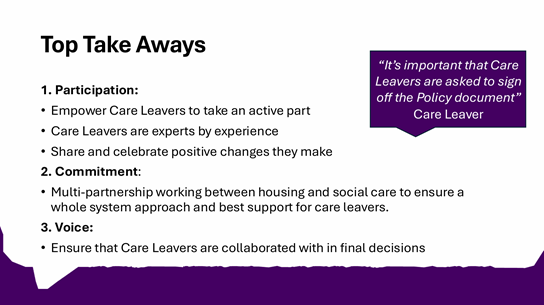
Young people were not simply consulted at the end of the process. They were involved throughout and helped shape decisions about what needed to change and how improvements should be implemented.
What Surrey did
1. Listening to young people
The work began by creating space for young people to explain their experiences. A care leaver designed and led a survey exploring how the Setting Up Home Allowance worked in practice and whether it supported young people as they moved into their first homes.
Through this, young people spoke about wanting their experiences to be taken seriously and be clearly understood. Many asked for guidance that was easier to access and written in a way they could follow. They also highlighted the importance of equal support and a system that recognised different situations, rather than a one-size-fits-all approach.
2. Understanding how the allowance worked
The survey helped the service understand not just whether young people knew about the Setting Up Home Allowance, but how it worked in practice. Most young people were aware of the allowance and felt confident about accessing it. However, this did not mean their needs were fully met.
As young people described their experiences, a clearer picture emerged. Although they could access the funding, many still had to pay additional costs themselves when moving into their first home. Several explained that the allowance did not cover essential items, leaving them to find other ways to bridge the gap.
Young people also spoke about uncertainty around what the allowance could be used for. This highlighted the need not only for financial support, but for clearer guidance and practical help so they could make informed decisions.
Care leaver survey finding
Of the 8 care leavers that completed the survey designed by one of the young people:
- All knew about the Setting Up Home Allowance.
- 7 were confident on how to access it.
- Half (4) had already used the allowance, and the other half (4) were in the process of using it.
- 7 said their worker arranged access for them and 1 had the money sent directly to their account and sent in receipts for the items bought.
- Young people reported that the allowance did not always cover what they needed – 6 had to pay for items themselves on top of the allowance.
- The young people said they needed additional support and clearer guidance of what the Setting Up Home Allowance could be used for.
- 5 young people had been made aware of charities that could support them with additional funding.
“Yes I did buy some things myself, as the money was not enough, but it did help me a lot”
Care leaver
3. Reviewing policy together
Surrey then brought care leavers together in workshops to review how the Setting Up Home Allowance operated and to consider what should be kept, changed or removed.
These sessions moved beyond gathering feedback and focused on shared problem-solving. Young people discussed their experiences of moving into their first homes and explored how the allowance affected their ability to set up a safe and comfortable living space.
Through these conversations, several consistent themes emerged.
- Young people wanted clear information about their rights and what support they were entitled to.
- They emphasised the importance of fairness so that support was consistent for everyone, while also recognising that different situations required flexibility.
- They also highlighted that they wanted greater freedom to make decisions about how the allowance was spent, rather than feeling restricted or uncertain.
The workshops gave practitioners and young people a shared understanding of the challenges and helped shape what changes were needed next.
4. Turning feedback into change
Following the workshops, Surrey began translating young people’s feedback into practical changes. One of the first priorities was improving clarity. The service developed clearer guidance explaining what the allowance could be used for and made this information accessible through the local offer so young people and staff could easily refer to it.
They also reviewed how information was communicated, using care-experienced preferred language and presenting guidance in a way that was easier to understand. Recognising that preparation needed to start earlier, the service extended support to young people from age 16 so they could begin planning for independence before moving into their first home.
Alongside this, Surrey introduced budgeting sessions and signposted young people to additional sources of support, including charities and discounts. This helped young people make the allowance go further and feel more confident managing their finances.
What difference is it making?
The project has led to both practical improvements and the development of a new Setting Up Home Allowance policy within Surrey’s care leaver service. The policy has been co-produced with young people, signed off by them and shared with practitioners and care leavers, and is due to be implemented shortly. This work is helping create a clearer and more consistent approach across the service.
Young people now receive earlier preparation for independence, including budgeting and planning support before moving into their first tenancy. Surrey’s User Voice and Participation (UVP) team has also worked alongside the House Project and the Care Covenant Lead to strengthen wider support, including exploring partnerships and additional funding to help with high-cost items.
The council secured an additional £37,000 for 2025 to 2026 to support expenses such as flooring, responding directly to young people’s experiences that the allowance alone was often not enough when moving into an empty property.
Alongside this, young people highlighted the need for clearer practical guidance when entering a tenancy, such as understanding household systems and responsibilities. This feedback has informed improvements to preparation and tenancy readiness support.
Read Surrey’s Setting Up Home Allowance policy (PDF, 600kb)
Read the young people’s version of the Setting Up Home Allowance policy (PDF, 500kb)
What happens next?
Surrey has committed to continuing to develop this work rather than treating it as a one-off project. The Setting Up Home Allowance policy will be reviewed annually so it can respond to rising living costs and changing needs.
The service is also continuing to explore ways to reduce the amount young people need to spend from the allowance on high-cost items such as flooring, and to work with housing partners to improve the support available when young people move into a tenancy. Alongside this, there is a focus on strengthening preparation for independent living so young people feel ready for the practical responsibilities of maintaining a home.
Learning and reflections
Throughout the project, Surrey identified several important lessons about improving support for care leavers.
A key learning was the value of involving young people from the beginning. Care leavers brought practical insight into what moving into a first home actually involved, and their contributions directly shaped both the policy and how the service operates in practice. Their involvement helped staff move beyond assumptions and better understand the day-to-day challenges young people face.
The project also showed that preparation needs to start earlier. Many young people said they wanted information and support before they turned 18 so they could plan ahead and feel more confident about living independently.
Advice to other local authorities
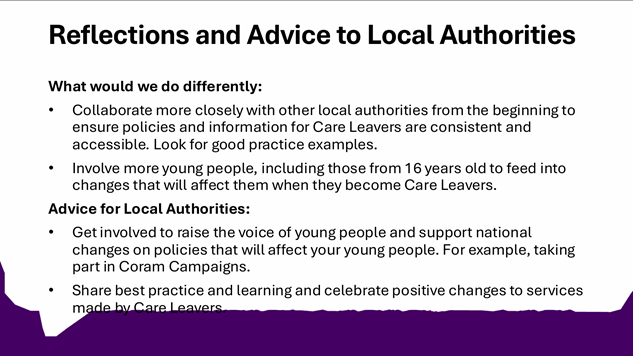
Based on their experience, Surrey has encouraged other local authorities to involve young people as early as possible when reviewing support for care leavers. They found that meaningful participation not only improved the policy itself but also helped staff better understand the practical realities young people face when moving into independent living.
They also highlighted the importance of sharing learning between areas and working together on wider change. By exchanging practice and contributing to national conversations, local authorities can help build more consistent support for care-experienced young people across the country.